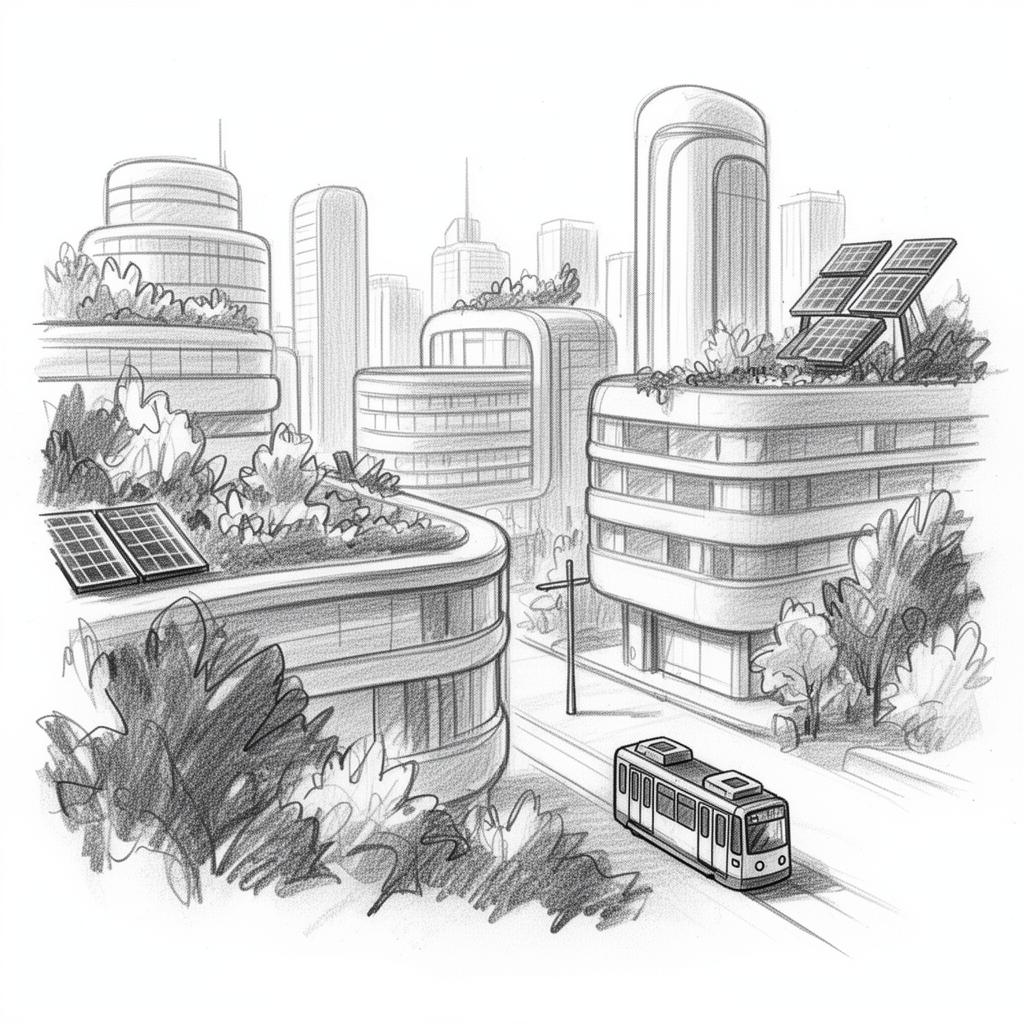
Smart cities: retrofitting 1.38 million homes
Urban transformation is one of the central pillars of the updated PNIEC. The ambition for energy retrofitting has been raised to 1.38 million homes, up from 1.2 million in the original plan, turning the building stock into an efficiency sink.
For the first time, the plan incorporates life-cycle analysis of buildings, a methodology that assesses environmental impact from material extraction through to demolition, promoting sustainable materials and the circular economy in construction.
Local electricity markets, another new feature of the PNIEC, will allow energy communities and smart neighborhoods to manage their own generation, storage and consumption, creating micro-grids that optimize the use of renewables at an urban scale.
Households' average energy spending equaled 7.8% of their budget in 2019. Thanks to PNIEC measures, it will fall to 5.7% by the end of the decade, with the greatest benefit for lower-income households, whose disposable gross income will rise the most.
Energy cybersecurity is added as a cross-cutting measure, protecting the critical infrastructure of smart cities — from digitalized electricity grids to connected building-management systems.
Source: PNIEC 2024 — Ministry for the Ecological Transition