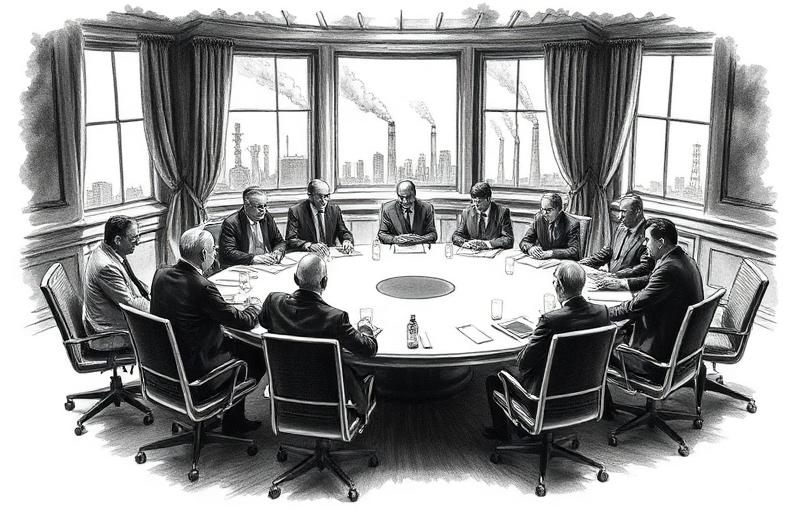
EU competitiveness summit puts energy prices center stage
The EU's informal competitiveness summit held in Belgium put energy prices at the center of the European debate. Leaders acknowledged that the gap in energy costs with the United States and China is eroding the competitiveness of European industry and driving the offshoring of energy-intensive activities.
Reform of the Emissions Trading System (ETS) was one of the most contentious issues. Several member states called for a review of carbon-pricing mechanisms to prevent European industries from being placed at a competitive disadvantage against rivals in countries without equivalent climate regulation.
The Carbon Border Adjustment Mechanism (CBAM), which taxes imports of high-carbon-footprint products, was defended as an essential tool to level the playing field. However, its effective implementation requires complex trade agreements and a climate diplomacy the EU is still building.
Europe's industrial strategy seeks to combine decarbonization with reindustrialization: investment in clean technologies manufactured in Europe, long-term renewable-energy contracts for industry, and faster build-out of electricity transmission grids to integrate low-cost renewable generation.
The emerging consensus is that cheap energy is a necessary condition for European competitiveness, but it must also be clean. Renewable acceleration is not just climate policy: it is an industrial strategy that can restore competitive energy costs to Europe if executed quickly and with coordination.
Source: Rinnovabili EU — EU Competitiveness Summit