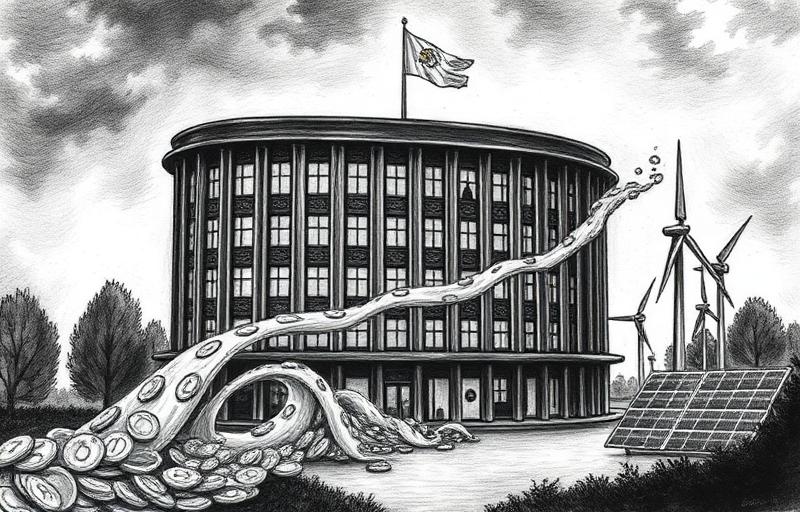
Europe's clean-energy investment gap: €660 billion a year
The European Commission has presented its new clean-energy investment strategy, an ambitious plan to mobilize private capital and close a financing gap estimated at €660 billion a year. Without this massive injection of funds, the EU's climate targets for 2030 and 2050 would remain out of reach.
The strategy rests on three pillars: regulatory simplification to attract investors, the creation of green financial instruments that reduce perceived risk, and the harmonization of European capital markets to facilitate the cross-border flow of investment in renewables, grids and hydrogen.
The private sector must take the lead role. Public investment — through EU funds, the EIB and national budgets — acts as a lever, but the bulk of the required capital must come from pension funds, insurers and green bond markets. The EU is already the world's largest issuer of sovereign green bonds.
The barriers are not only financial: regulatory fragmentation among member states, slow permitting and political uncertainty hold back projects that are, on paper, profitable. The strategy proposes one-stop shops, maximum processing deadlines and renewable acceleration zones.
The message is clear: every euro invested in clean energy generates returns in jobs, industrial competitiveness, security of supply and public health. Europe is competing with the United States and China to lead the energy revolution, and the speed of capital mobilization will determine who wins that race.
Source: Rinnovabili EU — Clean Energy Investment Strategy