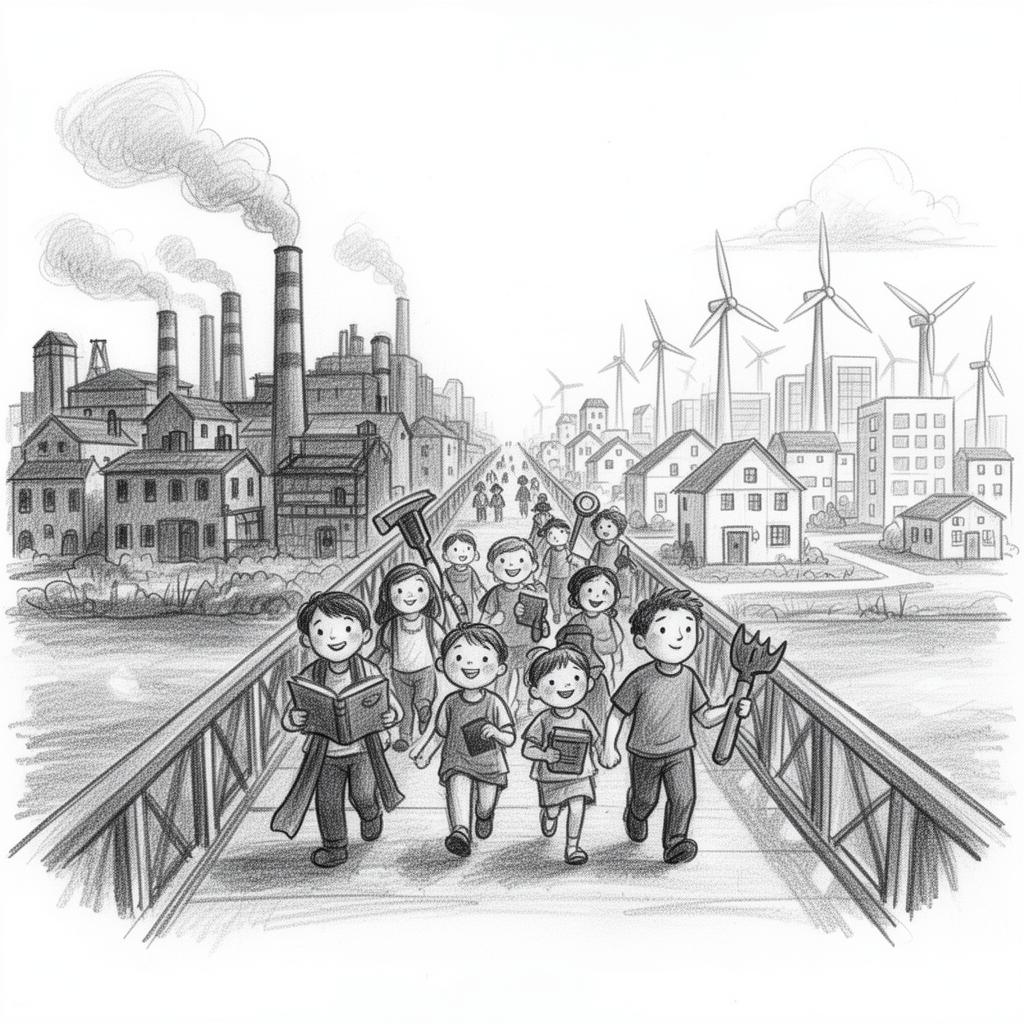
A just transition: leaving no one behind
The PNIEC update strengthens its commitment to a just transition, a framework that ensures the benefits of the energy transformation are distributed equitably and that no one is left behind in the shift of productive model.
Households' average energy spending will fall from 7.8% of their income in 2019 to 5.7% in 2030. The benefit will be greatest for lower-income households, whose disposable gross income will rise proportionally more, reducing energy poverty.
For the first time, the plan incorporates a gender perspective as a cross-cutting theme, recognizing that women suffer disproportionately from the effects of energy poverty and that the transition must generate equitable job opportunities.
The demographic challenge is integrated as a key dimension: renewable energy and the bioeconomy can revitalize rural areas, generating jobs and economic activity in regions affected by depopulation. Just-transition agreements in mining and thermal-power regions are a pioneering example.
The plan incorporates more than 12,000 contributions from different administrations, economic sectors, NGOs and civil society, the result of a broad public consultation process that reinforces the document's legitimacy and social ambition.
Source: PNIEC 2024 — Ministry for the Ecological Transition